- Buy 3 Cartons Get 25% Off + Free Shipping
- Buy 4-5 Cartons Get 30% Off + Free Shipping
- Buy 6+ Cartons Get 35% Off + Free Shipping
Free Express Shipping for orders over $99
- 100% Authentic Products
- Fast & Discreet Delivery
- Secure Shopping

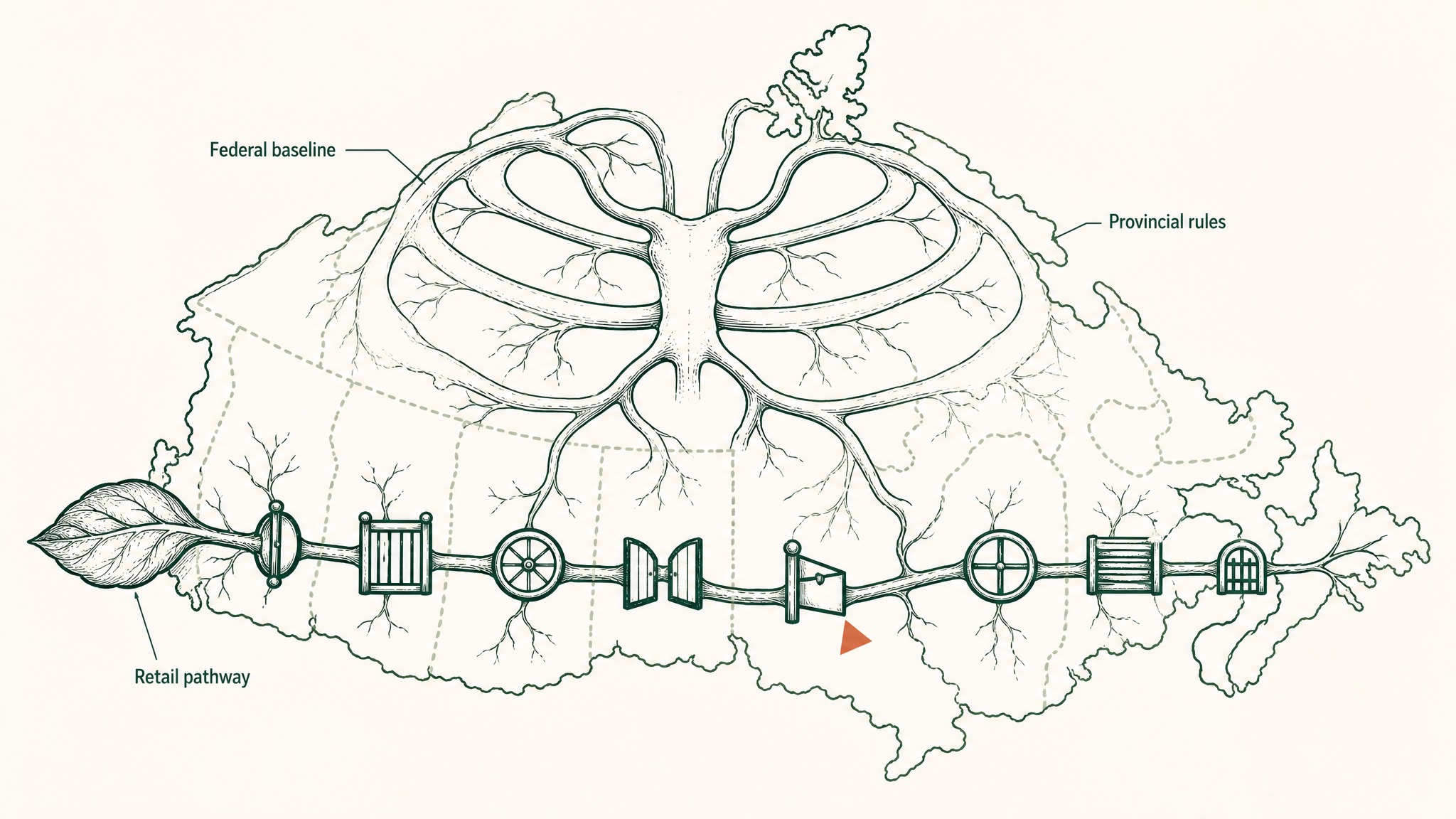
Tobacco law in Canada works in two layers, and most buyers only notice the second one when the cart total changes. Federal rules set the floor for the whole country: plain packaging, large health warnings, a federal excise duty, and a national menthol restriction on commercial cigarettes. Then each province and territory stacks its own rules on top: a different legal age, different flavour treatment, a different tax rate, and different delivery conditions. Cross a provincial line and the same carton from the cigarettes catalogue can arrive at a different price, under a different age rule, with a different set of variants in stock.
This guide is the regulation comparison, not a brand pick list. Other North Nation guides cover which Canadian brands are worth buying and where the value cartons sit. This one walks through which rules apply where you live, so you know what to expect before you order. For the deeper single-rule reads, the tobacco laws library has the province-specific posts.
Here is the fast version. This table is the comparison most buyers actually want: what age applies, and roughly where the province lands on tobacco tax, which is the main price lever. Tax tiers are directional 2026 bands, not exact per-carton figures, because rates move with provincial budgets.
| Province / Territory | Legal age | Provincial tax tier | Flavour rules beyond federal floor |
|---|---|---|---|
| Ontario | 19 | Low | Standard federal restrictions |
| Quebec | 18 | Low | Stricter on some flavoured formats |
| Alberta | 18 | Mid-high | Standard federal restrictions |
| British Columbia | 19 | High | Standard federal restrictions |
| Manitoba | 18 | Mid-high | Added flavour limits |
| Saskatchewan | 18 | Mid-high | Standard federal restrictions |
| Nova Scotia | 19 | High | Added flavour limits |
| New Brunswick | 19 | High | Added flavour limits |
| Prince Edward Island | 19 | High | Standard federal restrictions |
| Newfoundland & Labrador | 19 | High | Standard federal restrictions |
| Yukon | 19 | Mid-high | Standard federal restrictions |
| Northwest Territories | 19 | High | Standard federal restrictions |
| Nunavut | 19 | Highest | Standard federal restrictions |
The rest of this guide goes through each column.
Canada does not set one national minimum age. Each province and territory writes its own:
The threshold applies to purchase, to possession in some provinces, and to accepting a delivery. Licensed online retailers verify age at checkout, and the courier may also ask for government-issued photo ID at the door depending on the destination. If you order across a provincial line, the destination’s rule applies, not the seller’s. So an 18-year-old in Alberta ordering to a friend at a British Columbia address is on the 19 rule, because the shipping address governs.
A national Tobacco21 standard has been discussed for years, but as of 2026 the split above is still current. If you are close to the line, check your provincial Ministry of Health page, because an age change can take effect faster than retail systems update their copy.
Start with the consensus, because it is correct: menthol and most characterising flavours in commercial cigarettes have been restricted federally since the 2017 amendments to the Tobacco Act. That is the national floor, and it holds everywhere. The detail people miss is that several provinces layered extra flavour rules on top over the years, including Quebec, Nova Scotia, New Brunswick, and Manitoba, with different treatment of cigarillos, smokeless products, and capsule formats.
Capsule (crushball) cigarettes, the ones that release flavour when you squeeze the filter, sit in their own provincial grey zone. A pack like Canadian Crush in cherry stays available where the format is permitted, and you will see the same SKU listed in some provinces and unavailable in others.
Indigenous-manufactured cigarettes, including many native menthol, grape, and vanilla variants, operate under a separate regulatory framework. That is why those products appear on licensed Canadian online catalogues even when mainstream commercial menthol does not. Availability is checked at the product level, not the catalogue level. Not every variant ships to every province, because provincial flavour and descriptor restrictions differ, and the product page lists province-by-province availability where it differs from the national catalogue. If menthol is what you are after, the menthol cigarettes range shows what ships to your address.
Shop the Cigarette Catalogue →
Provincial tobacco tax is why a carton priced the same at the manufacturer level lands at a very different price in Toronto versus Edmonton versus Halifax. The tax stack a Canadian buyer pays:
The provincial layer is the swing factor. Broad 2026 bands look like this:
A licensed online retailer calculates provincial tax from your shipping address at checkout, so the cart total is the landed price with no surprise top-up on delivery. At North Nation, provincial tobacco tax for the shipping address is calculated and applied at checkout, so the number shown at payment is the final landed price. That is why a carton of Canadian Classics Silver Sliders ships at one price to a Toronto address and a noticeably higher one to an Iqaluit address, despite being the identical SKU.
If you are travelling and thinking about bringing cartons in instead, the rules are different again, and the personal-import limits are covered in the how many cigarettes can I bring to Canada guide.
Online tobacco sales are permitted in every province where licensed tobacco delivery exists. The compliance steps every legitimate Canadian retailer follows are the same coast to coast:
Delivery windows depend on geography more than on regulation. Central Canadian addresses (Ontario, Quebec) typically see orders in 2 to 4 business days. Atlantic, Prairie, and territorial destinations usually run 5 to 8 business days.
Canada moved to plain, standardised cigarette packaging nationally in 2019. Every commercial pack and carton uses the same beige-brown colour (Pantone 448 C), the same font for the brand name, a large mandatory health warning, and no promotional imagery, slip-cases, or premium finishes. Since 2024, individual cigarettes also carry a printed warning directly on each stick, a Canadian first.
That part is federal and uniform. What varies by province is the in-store experience: display bans (whether product can be visible behind the counter), age-signage rules, and the treatment of cigars, smokeless tobacco, and accessories. For online buyers the display piece barely matters, because the pack and its warnings are identical regardless of where you order from or to.
Indigenous-manufactured cigarettes operate under a separate framework rooted in treaty rights and self-governance over commerce on reserve. The practical consequences for a buyer:
For provincial buyers, the practical outcome is a broader catalogue than the mainstream shelf, especially across menthol, capsule, and slims formats. If slims are your thing, the slim cigarettes range is a good example of stock that mainstream retail rarely carries.
It depends on the province. The minimum age to buy tobacco is 18 in Alberta, Manitoba, Quebec, and Saskatchewan, and 19 in every other province and territory. Online orders use the age threshold of the shipping address, not the retailer’s province.
Yes, in every province where licensed tobacco delivery is permitted. The retailer must verify your age at checkout, ship in plain outer packaging with no branding visible, and calculate provincial tobacco tax from the shipping address.
On a tax basis, Ontario and Quebec sit at the lowest end of the provincial curve, and the Atlantic provinces and territories sit at the top, with Nunavut the highest. Landed price also depends on shipping distance and SKU availability, so the lowest till price is not always the lowest delivered price.
Menthol is restricted in commercial cigarettes under federal law dating to 2017. Indigenous-manufactured menthol cigarettes operate under a different framework and remain available through licensed Canadian online retailers, subject to provincial availability.
Often yes. Many provinces require the courier to verify the recipient’s age at the door with government photo ID. The requirement is applied most consistently on first-time orders and on Atlantic and territorial deliveries.
No. Tobacco products are non-returnable once shipped under federal regulation. This is why licensed retailers ask buyers to confirm address, product, and quantity carefully at checkout before payment is taken.
Provincial tobacco tax is the main driver. Federal excise and manufacturer pricing are constant across Canada, but the provincial tax rate plus the GST or HST component adds a per-cigarette charge that ranges widely, and the final landed price is set at checkout.
Cross a provincial line and the rules move: age, tax, flavour availability, delivery requirements, and even which SKUs are listed all shift. The good news is that the work happens at checkout. A licensed Canadian online retailer handles the age check, the tax calculation, the plain packaging, and the province-specific delivery rules for you. Your job is to pick the carton.
Shop the Full Cigarette Catalogue →
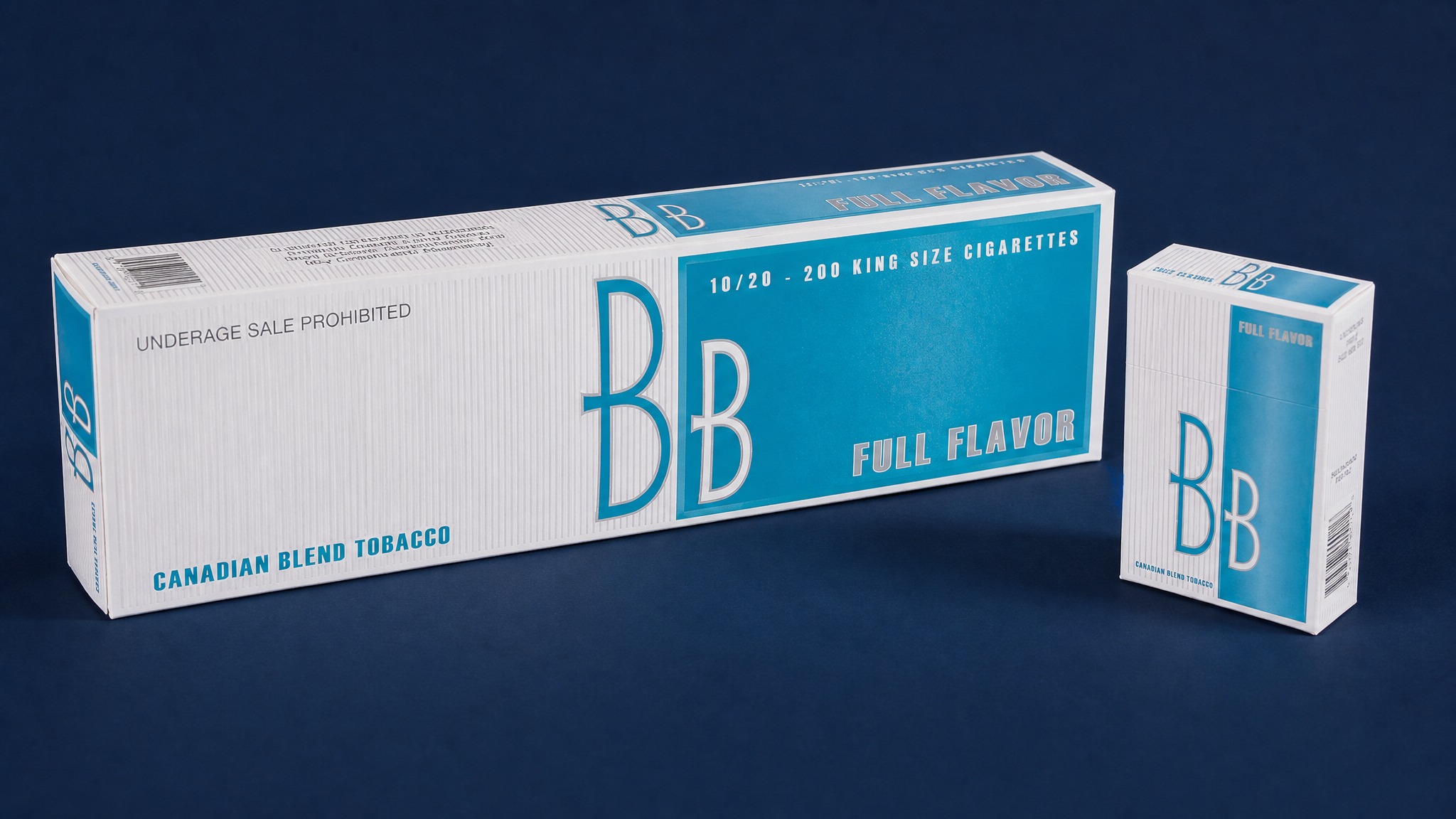
Plain packaging is federal and identical nationwide; the price and rules around it change by province.